Shopify in Israel
The Complete Guide to Opening a Store and Connecting Payments With PayPlus
Everything you need to know to open a successful Shopify store in Israel, understand why the payment experience determines the fate of the sale, and how connecting to PayPlus centralizes payments, invoices, and payment management in one system.

Shopify Is the World's Leading E-commerce Platform.
Today, most stores don't fail because of products or design, but because of one central thing: the payment experience. E-commerce studies show that a significant portion of customers abandon their cart at the very last stage of the purchase, not because of price or product, but because of a long, cumbersome, or unclear payment process.

"Every Store Is Measured by Its Ability to Turn Visitors Into Paying Customers."
A successful online store isn't just about beautiful design or quality products. This is exactly where PayPlus comes in, with an advanced payment solution, a smooth user experience, and full management of your entire billing and invoicing operation from a single system.
A Full Payments and Invoicing Solution
A fast, secure, and personalized Checkout experience — ready to go in minutes. Support for BuyMe, Bit, Google Pay, Apple Pay, Tav HaZahav, Cibus, and leading customer clubs, with advanced security and a smooth payment experience.
A full invoicing solution for Shopify with Gift Cards support, credit management directly from PayPlus, and accurate financial reconciliation, while fully complying with the requirements of the Israel Tax Authority.
What's in the Guide?
In this guide, we'll explain how to set up a Shopify store, what the platform's main advantages are, and how integrating with PayPlus lets businesses in Israel manage payments, accounting documents, customer clubs, physical stores, and online sales in a way that drives their success — all under one roof.

Why Shopify Is the Leading Platform for Online Commerce
Shopify is a cloud-based e-commerce platform that lets any business set up an online store easily, without needing servers, complex technical maintenance, or programming knowledge. The system centralizes everything you need to run an online store in one place:

How Do You Set Up a Shopify Store?
The setup process is relatively simple. The first four steps build the store, and the fifth is what turns it into a sales machine.

1. Opening an Account
Register for Shopify and choose your business type.

2. Choosing a Template
Shopify offers a wide range of professional templates that can be easily customized to your brand.

3. Adding Products
Upload images, descriptions, prices, and inventory — and the catalog is ready to sell.

4. Connecting a Domain
Connect an existing domain or purchase a new one directly from the system.

5. Connecting a Payment System
The critical step for your first sale: a quick connection to PayPlus for payments, invoices, and payment management in minutes.
Common Mistakes Businesses Make When Connecting Shopify to Payments
Many business owners make recurring mistakes when connecting a payment system to their Shopify store — mistakes that can cost them significant lost sales. Here are the most common ones:

External Invoicing Systems
Using separate invoicing systems can complicate the workflow, slow down operations, and hurt the purchase experience.

No Support for Local Payments
Customers in Israel expect to see options like Apple Pay, Google Pay, and others. A lack of support for them lowers sales.

Payment Without Business Branding
When the customer leaves the store for another payment page, with no design or personalization, there's an immediate drop in trust and conversion rate.

Unsynced Inventory Management
Gaps between Shopify inventory and actual stock cause overselling, cancellations, and a poor customer experience.

A Checkout Process That's Too Long
Every extra step in the purchase adds friction and increases the chance the customer abandons before completing the order.

Payments Disconnected From Business Systems
When the customer leaves the store for another payment page, with no design or personalization, there's an immediate drop in trust and conversion rate.
Why Businesses in Israel Choose PayPlus for Shopify?
PayPlus is much more than a payment solution — it's a payments and business-management platform that centralizes all of a business's billing, payment, and accounting processes in one place.
Performance and Stability in the Cloud
Cloud infrastructure and advanced servers provide a fast, stable, and reliable payment environment that reduces abandonment and improves the store's conversion rates.
Let Customers Pay However Is Convenient for Them
Support for over 50 credit payment methods, Apple Pay, Google Pay, and bit, plus over 50 loyalty clubs, gift cards, and vouchers — for a payment experience that converts better.
One System for All Management
Payments, 5 types of accounting documents generated automatically, payment links, tokens, standing orders, subscriptions, and automations — all through one of the most comprehensive and advanced APIs in Israel, from a single place.
A payment experience in your brand's language.
PayPlus allows full customization of the payment environment, whether on a built-in Checkout page or a Redirect page. You can customize the logo, favicon, colors, background images, texts, button design, corner rounding, and marketing messages to create a unified, professional payment experience tailored to your brand.

A Physical and Online Store That Speak the Same Language
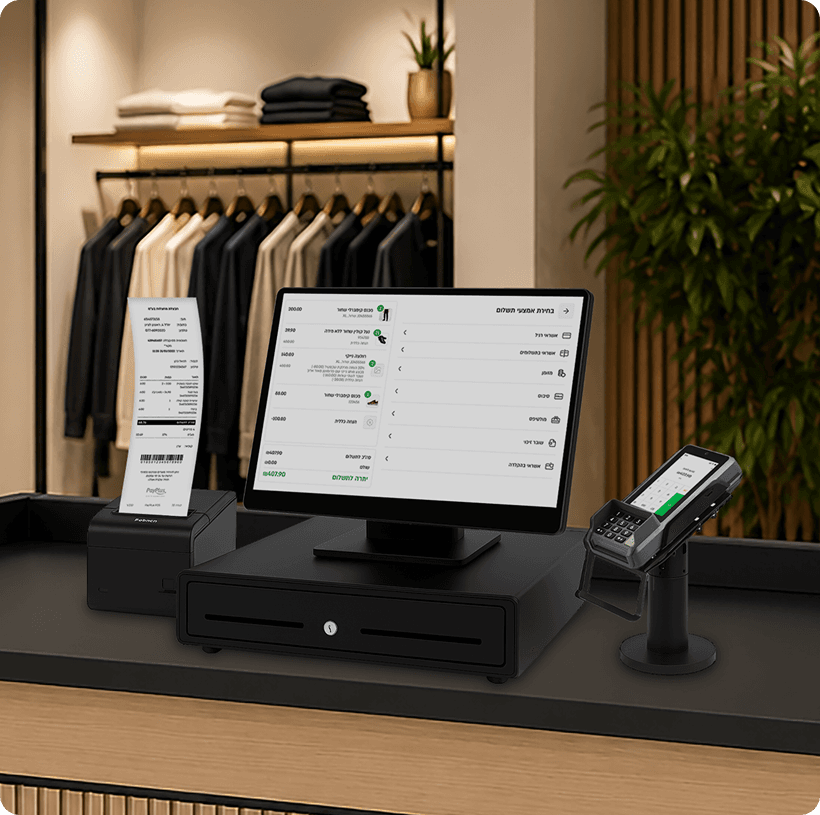
Unlike most payment solutions in Israel, PayPlus also offers an advanced POS system, so all sales channels are managed from a single system, in full sync with Shopify. The register, the online store, and accounting all speak the same language, in real time.

What Does the PayPlus POS System Include?
The Combination That Brings Stores to Success
When the physical store and the online store are connected to PayPlus, you can enjoy:
- Unified inventory across all sales channels
- Synced orders and customers
- Automatic product updates
- Centralized reporting from all sales channels
The result is fewer mistakes and more control over the business.
Do You Have a Shopify Store, or on Your Way to Opening One?
This is exactly the stage to choose a payment system that works for you. Join PayPlus today, connect to Shopify in minutes, and start managing your entire world of payments, billing, and invoices in one place.